Covering the green gap
- Client
- NIST
- Year
- 2024
- Type
- photomontage / explanatory diagram / animation
- Field
- nanophotonics / chip-scale lasers
- Links
- NIST story / paper
- Description
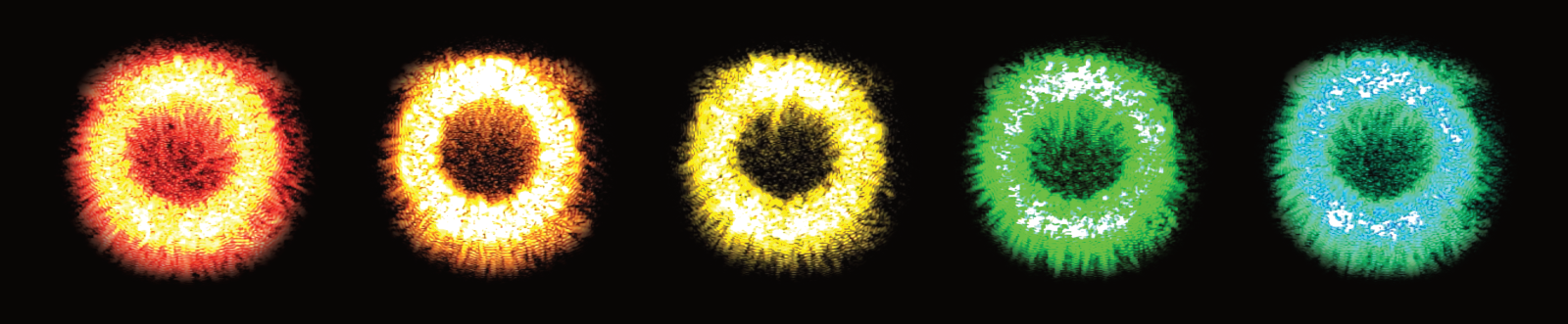
- Images for a NIST story about tiny chip-based lasers that fill the green gap in visible light.
Context
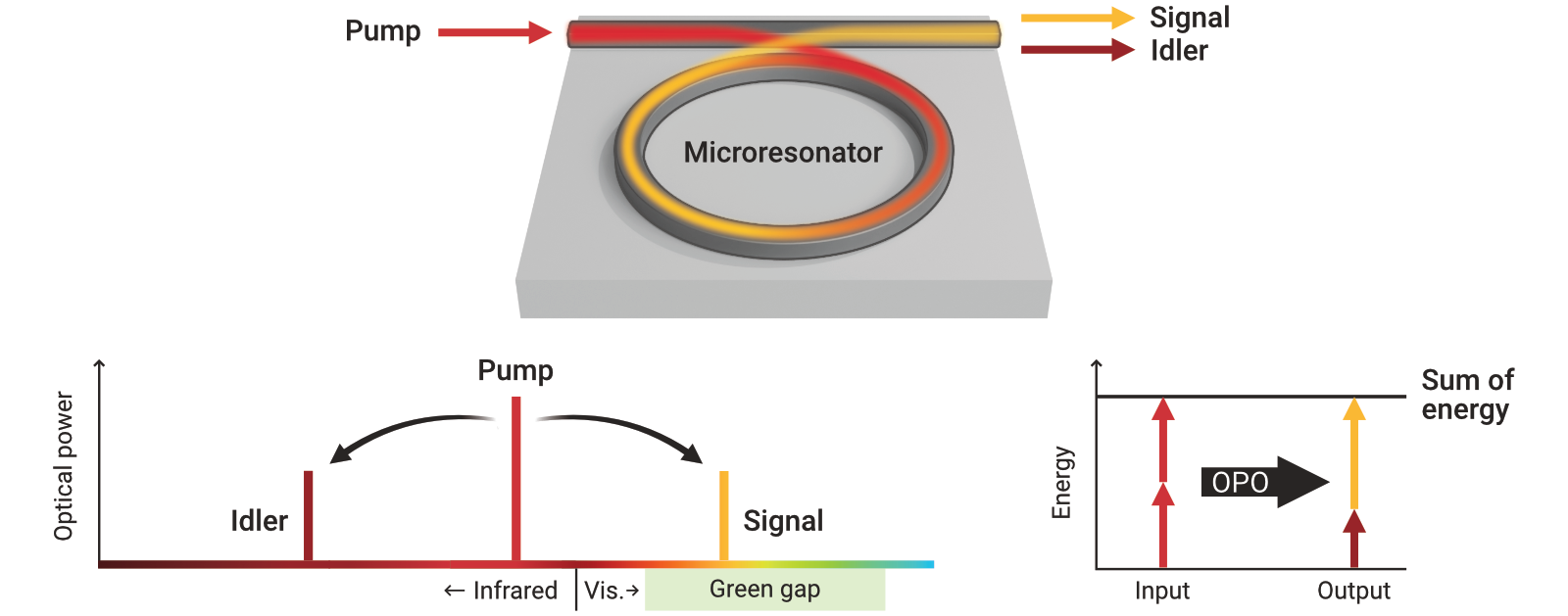
The story explained a chip-scale source of yellow and green laser light. These colors are difficult to produce with compact lasers, leaving a long-standing green gap between red and blue devices.
Approach
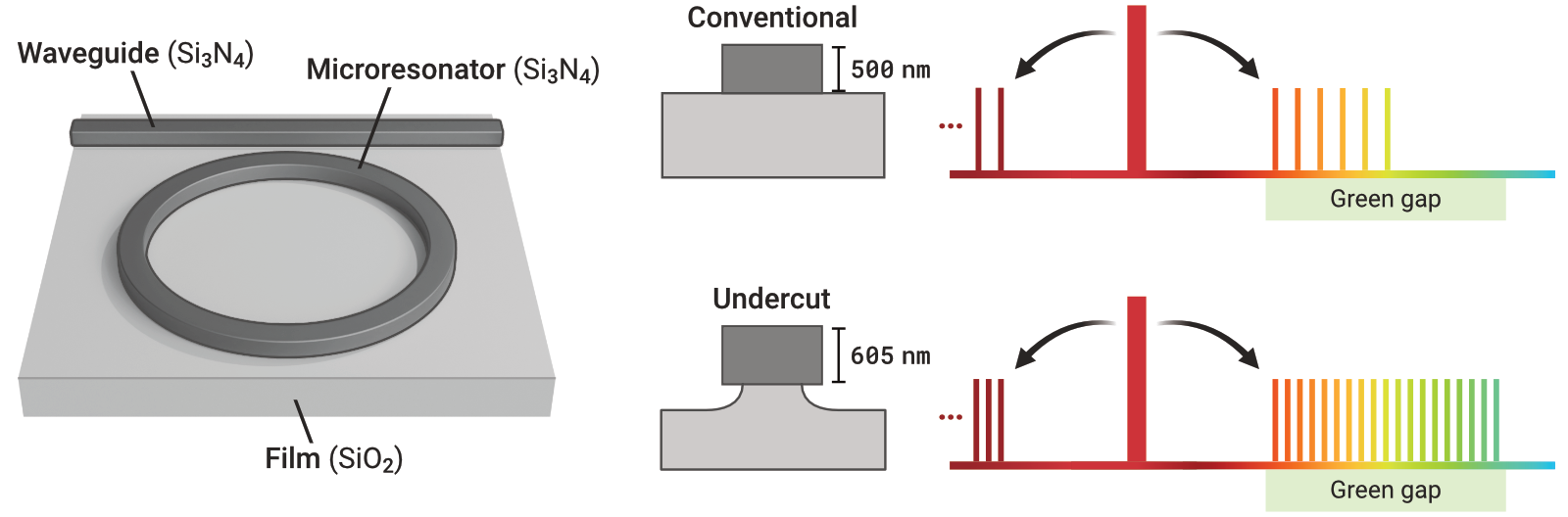
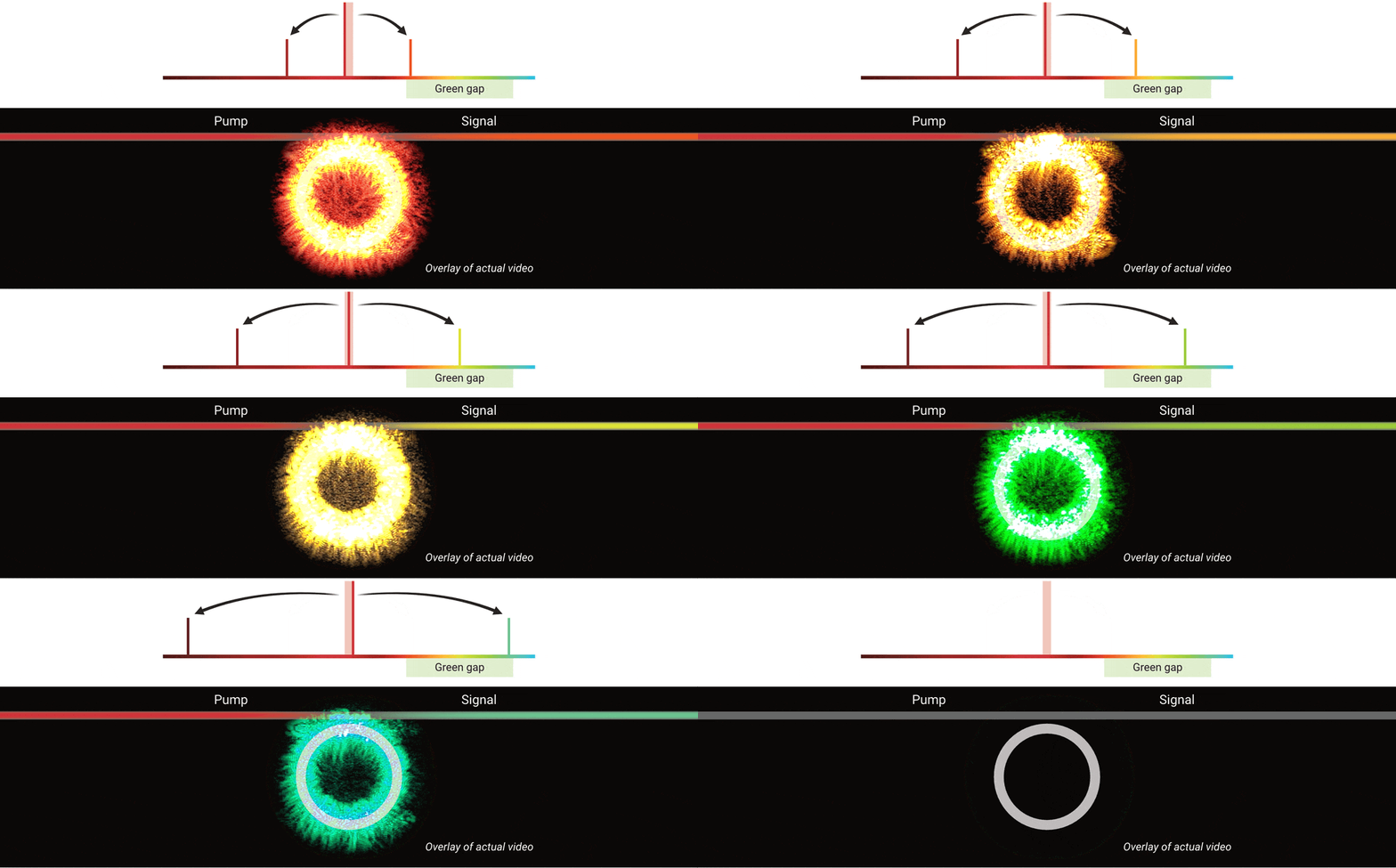
The paper figures were dense and technical. For the news story, I split the work into separate images showing the green-gap problem, how the microring converts infrared pump light into visible output, and how the undercut device design helped cover the full green-gap range.
Figures