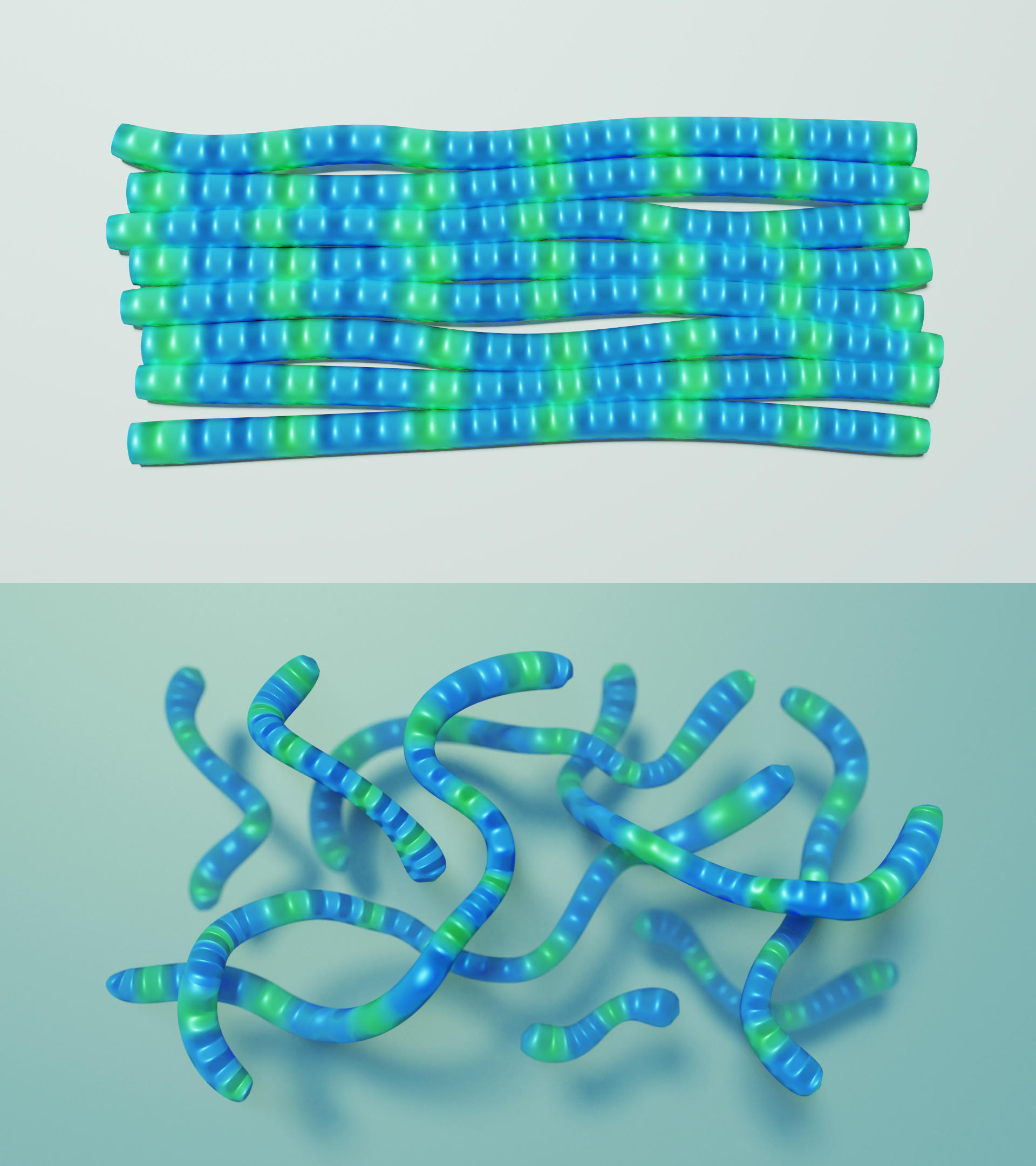
PCDTPT strands
- Client
- NIST
- Year
- 2020
- Type
- 3D illustration / explanatory diagram
- Field
- flexible electronics / polymer materials
- Links
- NIST news
- Description
- Illustrations using gummy-worm-like strands to explain conductivity in a flexible electronic material.
Context
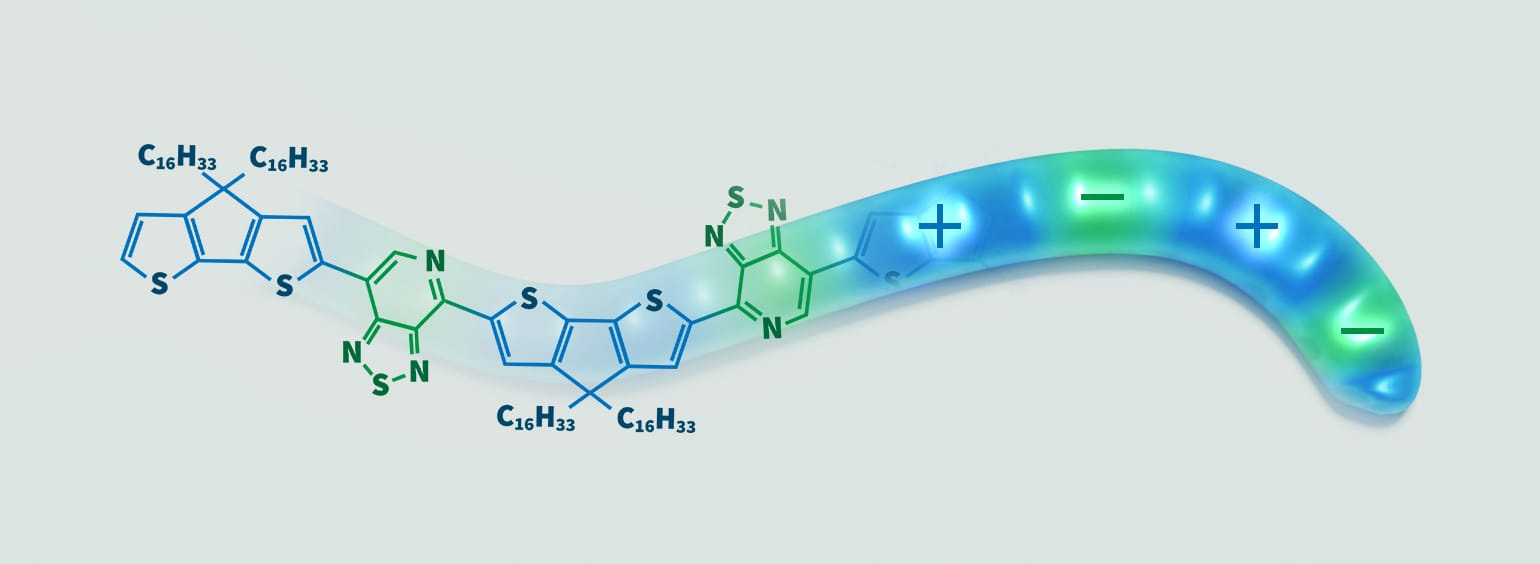
The research looked at PCDTPT, a conductive plastic studied for flexible electronics. The NIST story compared the polymer strands to gummy worms: each strand alternates between electron-donor and electron-acceptor parts.
The surprising result was that the material stayed conductive even when the strands were suspended in liquid instead of packed into a solid. That suggested conductivity was happening mainly along individual strands, not only between neighboring strands.
Approach
I used the gummy-worm analogy in two ways: first to show the alternating donor and acceptor parts within a strand, and then to compare strands packed in a solid with strands isolated in liquid.